
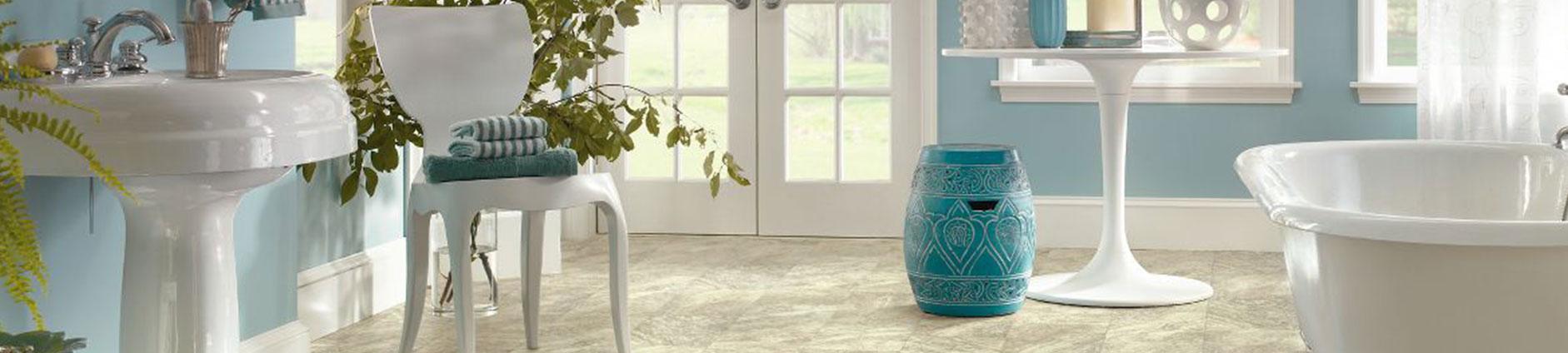
Versatile, Practical & Care-free
Ask for “linoleum” flooring in Edmonton today and you'll almost always be shown sheet vinyl, and there's a reason for that. True linoleum, made from linseed oil, cork dust, and other natural materials, is a different product from vinyl sheet, which is a printed vinyl surface bonded to a flexible backing. The two get used interchangeably because linoleum was the dominant seamless flooring for most of the last century, and the name stuck to the category even as vinyl took over. We carry both, and this guide covers what each does well, where sheet flooring still makes sense today, and where LVP is the better call instead.
The material difference matters mostly for two reasons: sustainability and long-term performance. Genuine linoleum, sold under brands like Forbo Marmoleum, is biodegradable and holds its colour all the way through the material, so scuffs and light wear don't expose a different layer underneath. Vinyl sheet is printed, with the pattern sitting in a layer near the top, and it's generally the more affordable and more widely available option of the two.
Whether the distinction matters to you depends on what you're prioritizing. If sustainability and a natural material matter to you, ask specifically for Marmoleum or another true linoleum product, since most of what gets called “linoleum” in casual conversation, including a lot of what you'll find online, is actually vinyl sheet.
The case for sheet flooring over LVP or vinyl tile comes down to one feature: seams. A sheet product installed in one piece has no grout lines and no plank edges for water, dirt, or bacteria to collect in. We carry sheet flooring in widths up to 12 feet, wide enough to cover most bathrooms, laundry rooms, and kitchens without a single seam.
In rooms wider than the sheet, installers place the seam in the least noticeable location and heat-weld or chemically weld it, creating a bond that's close to watertight rather than a visible gap. It's a detail most homeowners never think about again once it's installed.
That seamless quality is a genuine advantage anywhere hygiene or water control matters most: healthcare facilities, commercial kitchens, and at home, mudrooms and laundry rooms that deal with constant moisture. It's a smaller advantage in a dry living room, part of why sheet flooring has become more of a specialist choice than a default one.
On price, sheet vinyl is usually cheaper as a material, but the installed cost gap with LVP narrows once you factor in professional installation, since sheet flooring isn't a practical DIY project the way click-together LVP is.
Sheet vinyl needs to go down as one continuous, correctly measured piece, which is why it's almost always a job for a professional installer rather than a weekend project. A mismeasured cut can waste an entire sheet, and the material has to be worked around toilets, cabinets, and irregular corners with precision, since there's no second plank to hide a mistake the way there is with LVP.
Subfloor smoothness matters even more here than with tile or LVP, because sheet flooring is thin and flexible enough to show every bump, seam, or imperfection underneath it. Installers typically skim-coat or underlay the subfloor first to get a flawless surface before the sheet goes down. A typical room takes a professional crew about a day, similar to LVP, though the cost is usually higher once you account for subfloor prep and the skill a clean, seamless result requires.
Sheet flooring today leans more commercial than residential, though it hasn't disappeared from homes. The households that still choose it tend to be renovating a rental property, working with a tighter budget, or specifically want a room that can shrug off water without a second thought, like a basement bathroom, a laundry room, or a mudroom that deals with tracked-in snow, salt, and slush all winter. It holds up well against all of that, since there's no grout line or seam for melted snow to sit in and no finish that road salt will damage over time.
For a primary living space, or a room where look and feel matter more than pure water resistance, most of our customers land on LVP instead, and that's a reasonable call. Sheet vinyl earns its place in the rooms where practicality outweighs everything else.
Daily sweeping and regular mopping with a pH-neutral cleaner is all sheet flooring needs. Avoid ammonia-based or abrasive cleaners, and steer clear of wax or polish products unless the manufacturer specifically calls for them, since the wrong product can dull the finish or void the warranty. Check your product's warranty terms before using anything beyond a basic cleaner, since some manufacturers are specific about what's approved.
Quality sheet vinyl is genuinely waterproof, not just water-resistant, across the surface of the material itself. The vulnerable points are the edges and any seams, where water can work its way underneath if the installation wasn't sealed properly, another reason professional installation matters. In a flooding scenario, sheet vinyl generally performs better than LVP, since there's no plank-to-plank gap for water to seep into and swell the core.
The most common damage to sheet flooring is tears or gouges from dragging heavy furniture or appliances across it, since the material is more flexible than rigid LVP and can be cut or torn under enough force. Small tears and cuts can often be patched, and for something more visible, a professional can sometimes cut in a replacement patch from leftover material, though an exact colour and pattern match depends on having some in reserve.
Older or lower-quality vinyl can yellow over time, particularly with sun exposure, though this is far less common in current products, which use UV-stable finishes. Real linoleum ages differently and, because its wear layer runs through the full thickness of the material, tends to hide scuffs and minor damage better over the long run.
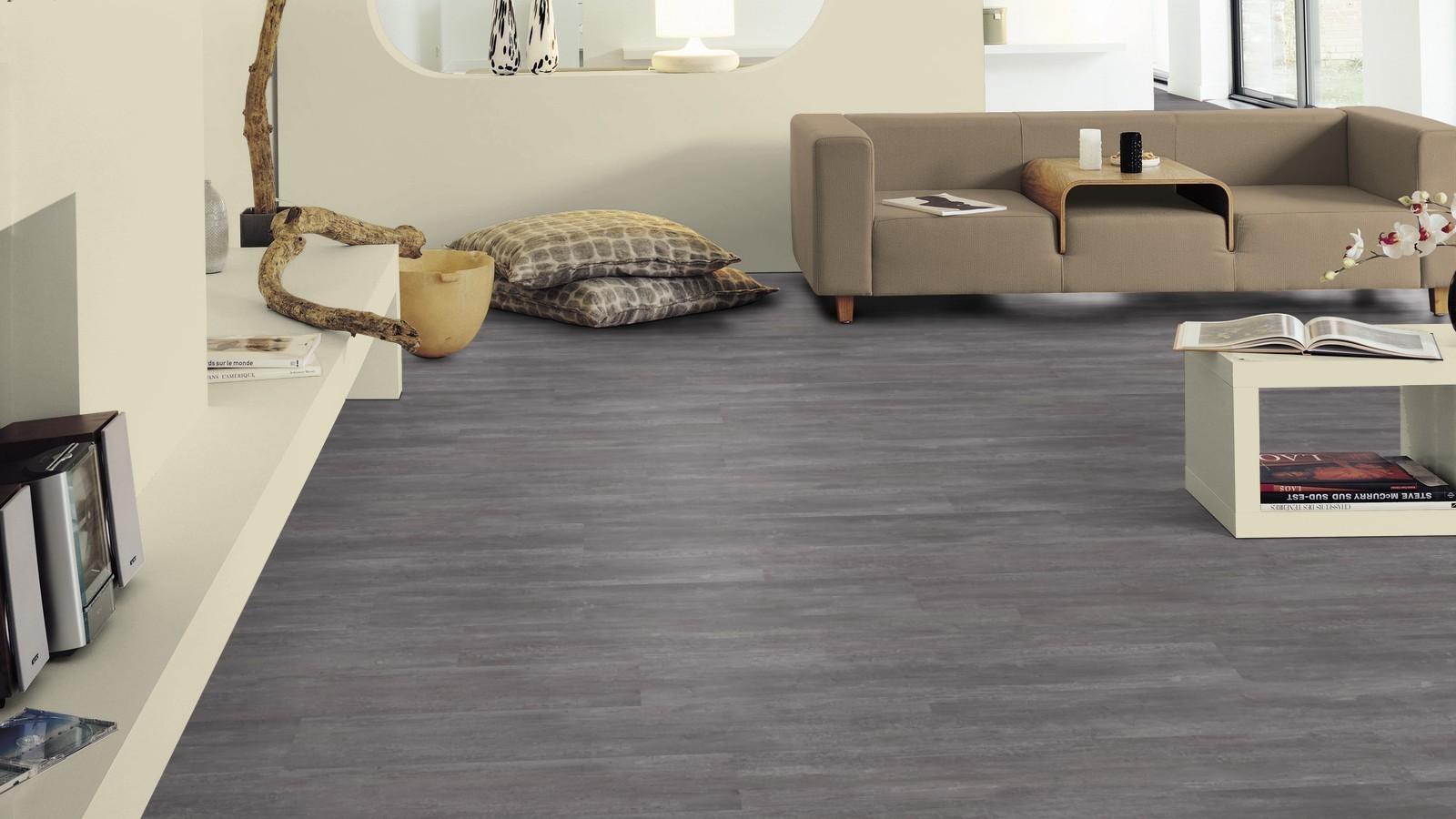
Modern HD printing on sheet vinyl convincingly mimics wood, stone, and ceramic, close enough that most people can't tell it apart from the real thing at a glance. Beyond the visual layer, textured options add a surface pattern that goes past a flat printed finish, which helps both realism and slip resistance underfoot. Sheet vinyl also has a slight cushioned feel compared to hard flooring, since it sits on a flexible backing rather than a rigid core.
Our showrooms carry a range of colours and patterns in stock, and we can special order a specific look if what you want isn't on the floor. For customers specifically after true linoleum, we carry Forbo Marmoleum, which costs more than standard vinyl sheet but delivers a genuinely sustainable, natural material with colour that runs all the way through. Whether that premium is worth it comes down to how much sustainability factors into your decision. Talk to a Flooring Consultant about what's in stock and what we can bring in.