

Adding Warmth & Comfort to Your Home
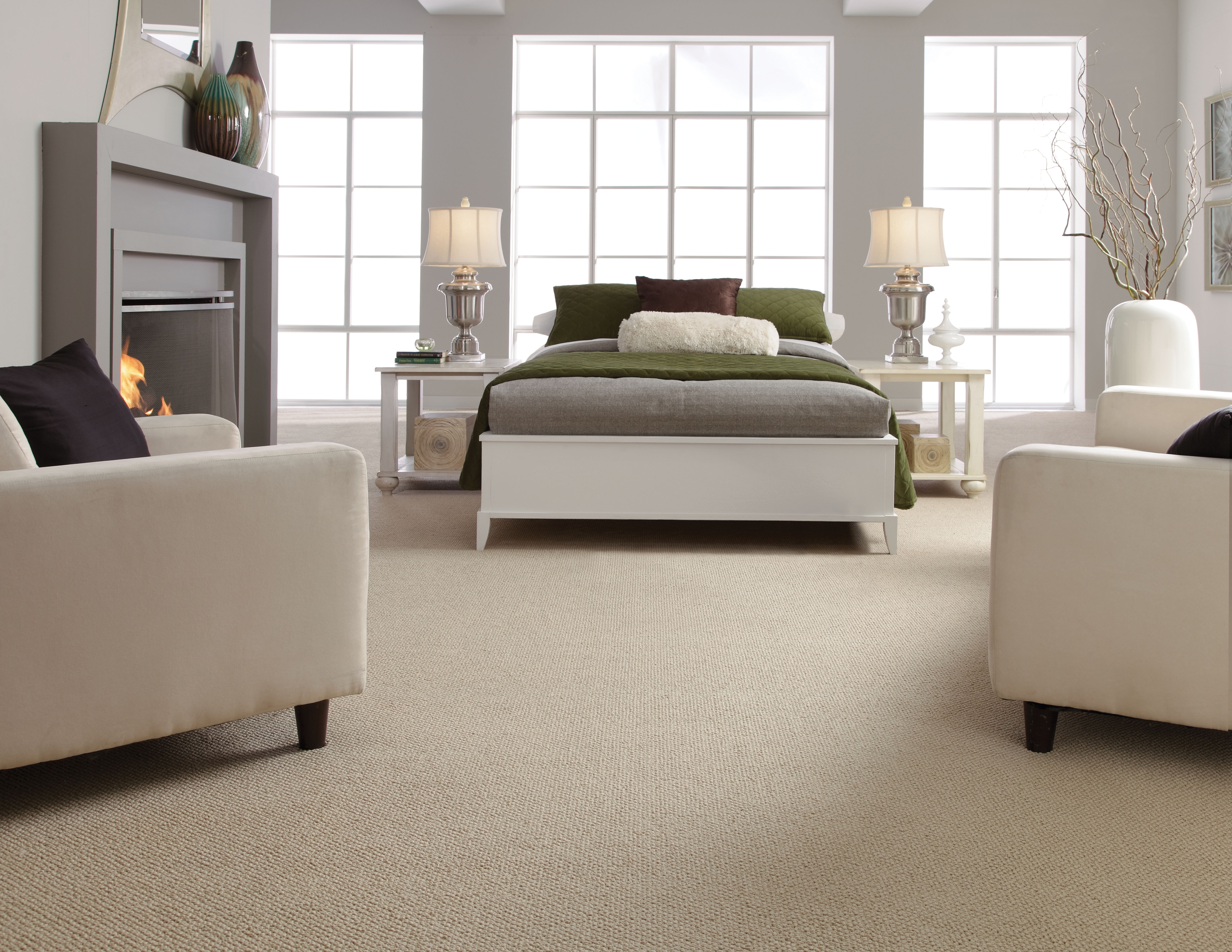
Carpet still gets picked more than any other flooring in Edmonton bedrooms, and for good reason. It has a warmth and softness underfoot that's hard to match, especially in a bedroom you're padding across barefoot on a January morning. But "carpet" covers a huge range of products, and the difference between a good choice and a regretted one usually comes down to construction, fibre, and padding, three things most buyers never get a straight answer on. Here's what actually matters.
Berber loop, patterned, and textured carpet aren't just style names. They're built differently, and that construction determines how the carpet performs. Berber loop uses uncut fibre loops packed tightly together, which makes it dense, durable, and resistant to crushing, a strong pick for busy family rooms and stairs. Patterned carpet uses a mix of loop heights to create texture that hides footprints and vacuum marks, which makes it a smart choice for living rooms where appearance matters day to day. Textured carpet twists the fibres at varying angles so the surface has a casual, slightly rumpled look that also happens to hide dirt and wear better than a flat, uniform cut.
The construction question people ask most is cut pile versus loop pile versus cut-and-loop. Loop pile, like Berber, leaves fibres uncut and looped, which makes it durable and less prone to matting, though snags can be more visible if you have pets that catch claws in it. Cut pile trims the loops so the fibres stand up individually, which gives a softer feel underfoot but tends to show footprints and vacuum lines more. Cut-and-loop combines both in a single carpet, often used to create patterns, and lands in the middle on durability and softness.
Face weight is the term that shows up on every spec sheet and confuses almost everyone. It's the weight of the fibre per square yard, not including backing, and it's a rough indicator of how much material is actually in the carpet. Higher face weight generally means a denser, more durable carpet, but it's not the only factor. Fibre type and twist level matter just as much, so don't judge a carpet on face weight alone.
Stairs are their own category. The constant flexing and pressure at the nose of each step wears carpet faster than almost anywhere else in the house, so a looser, plush cut pile that looks great in a bedroom can look tired on stairs within a couple of years. A dense loop or a tight twist pile holds up far better here, which is why Berber and low-profile textured options are the go-to for staircases.
Professional carpet installation includes stretching the carpet properly over the pad, seaming where needed, and trimming to fit against walls and transitions. Furniture moving and old carpet removal are typically available as add-ons and worth arranging in advance rather than assuming they're included.
A single bedroom usually takes a couple of hours, while a whole main floor can take most of a day depending on room count, stairs, and how much furniture needs to move. Stairs and tight cuts around fixtures add time regardless of square footage.
Professional cleaning every 12 to 18 months keeps most residential carpet performing well and preserves stain treatments longer. Steam cleaning is safe for most synthetic carpets, but wool needs a gentler approach since heat and moisture can affect the fibre differently, so check with your installer or manufacturer before renting a steam cleaner for a wool carpet specifically.
You can speed up the installation by
Remove all furniture, art, linens, trinkets, clothing etc. from the room
(Doors may need to be resized by a carpenter if your new carpet has a higher pile than the previous flooring)
Vacuuming your old flooring to minimize airborne dust and particles
Removing your old carpet
Padding comes down to thickness and density, and density matters more than thickness for most homes. A thinner, denser pad supports the carpet better and lasts longer than a thick, soft one that feels great underfoot on day one but compresses within a couple of years.
More expensive padding is worth it up to a point. Once you're past a mid-range density suited to your traffic level, additional cost buys you marginal comfort gains rather than meaningfully more lifespan. The sweet spot for most living spaces is a mid-density pad matched to the carpet manufacturer's recommendation, not the thickest one available.
Basements benefit from a thicker pad than above-grade rooms, since concrete slabs run cooler and a bit of extra thickness underfoot adds noticeably more warmth, while a standard pad works fine in bedrooms and living rooms.
"Stain-resistant" does not mean stain-proof, and that distinction matters more than the marketing suggests. Most stain treatments are applied to the fibre during manufacturing, creating a barrier that gives you time to blot up a spill before it sets in. Shaw's R2X stain and soil resistance technology bonds to the fibre at a molecular level rather than sitting as a surface coating, which is part of why it continues performing well through repeated cleanings. Dreamweaver takes a similar approach with its PureColor solution-dyed fibres, building colour and stain protection into the fibre itself rather than applying it afterward.
Either way, resistance buys you time, not immunity. Wine, dye-based drinks, and anything with strong colourants can still stain if left too long, and stain protection wears down gradually with cleaning and years of foot traffic. It doesn't disappear overnight, but don't expect year-fifteen performance to match year-one.
Fibre type plays a bigger role in stain resistance than most people expect. Polyester's more porous fibre structure actually holds onto stain-guarding treatments better than nylon, which is part of why polyester carpets tend to resist stains so well, even though nylon usually wins on overall durability. For pet owners specifically, it's worth looking for a product built with that in mind. Dreamweaver's PawPrint Protection is designed around resisting pet stains, and Shaw's Pet Perfect and Pet Perfect+ collections pair R2X protection with construction meant to stand up to pet accidents. Either option handles pet messes noticeably better than an untreated fibre.
We carry nylon, polyester, Triexta, polypropylene, and wool, and each one has a real trade-off worth knowing before you buy.
Nylon is the industry benchmark for durability and resilience. It bounces back from crushing better than any other synthetic fibre, which makes it the strongest choice for hallways, stairs, and family rooms that see daily traffic. It costs more than polyester, but for high-use areas, it's usually the fibre that ages best.
Polyester has come a long way and now offers excellent stain resistance and a soft feel at a lower price point than nylon. Durability comes down to ounce weight, density, and construction rather than fibre type alone, so a well-built polyester can genuinely hold its own in busier spaces. Generally speaking, polyester still sits a notch below nylon for resilience, but a higher density, well-constructed polyester paired with the right traffic area, a bedroom or a lower-traffic living space, gets excellent results.
Triexta, sold under names like SmartStrand, is built from a different polymer than traditional nylon or polyester and has genuinely impressive built-in stain resistance along with strong durability. It's not automatically the better product across the board. It costs more than polyester and performs close to nylon in most home settings, so whether it's worth the premium depends on your budget and how much you value that built-in stain protection specifically.
Polypropylene, often used in Berber-style loop carpets, resists moisture and staining well and costs less, but it has lower resilience than nylon and can flatten under heavy furniture over time.
Wool is the one people ask about less often but shouldn't overlook. It's naturally stain-resistant, has a genuinely luxurious feel, and holds its texture for years, but it costs more, isn't as forgiving with certain spills, and needs a bit more care. For a formal living room or a space where feel matters more than kid-and-dog durability, it's worth a look.
For hallways and family rooms specifically, nylon is the fibre that consistently holds up best over years of daily use.
A well-chosen carpet with proper padding realistically lasts 10 to 15 years in an average household, though high-traffic areas and stairs will show wear sooner than bedrooms. The biggest driver of wear isn't age, it's foot traffic combined with grit that acts like sandpaper on the fibres every time someone walks across it without wiping their shoes.
You'll know it's time to replace when the pile stays crushed after vacuuming instead of springing back, when matting shows up in traffic paths that cleaning won't fix, or when seams start separating. Padding plays a bigger role in lifespan than most people realize. A worn-out or undersized pad lets the carpet backing flex more with every step, which accelerates wear on the fibres above it, so replacing carpet without upgrading tired padding underneath is a common and avoidable mistake.
Bedrooms are carpet's strongest use case, full stop. A softer cut pile makes sense there since traffic is lower and comfort matters more than durability. Basements come a close second, where a thick carpet paired with a substantial underpad adds real warmth to a space that's often the coldest room in the house. Family rooms need something tougher, so a denser cut pile, a textured style, or a tight loop construction holds up better against daily use.
Carpet is still a practical choice for families with kids and pets, but the fibre and construction decisions matter more in that context, not less. Nylon with a stain treatment and a quality pad underneath will outlast a budget polyester carpet by years in a busy household.
For rental properties, durability and easy spot-cleaning matter more than softness, so a medium weight polyester or polypropylene Berber tends to be the more sensible landlord choice over a plush, higher-maintenance option.
Static electricity in dry Edmonton winters is a real and common complaint, and it comes down to a mix of fibre type and humidity indoors. Synthetic fibres, especially in low-humidity months, build up static more than wool does. Anti-static treatments help, and running a humidifier during winter reduces the problem noticeably regardless of which carpet you choose
For tracked-in snow, salt, and mud, denser loop constructions and darker or patterned colours hide the aftermath better than a light, plush cut pile near entryways. It's also worth using a proper boot mat at every entry point, since salt residue left to sit is what actually damages fibres over time, not the moisture itself.
Basements are their own conversation. Concrete slabs can carry moisture up through the subfloor even when everything looks dry, so a moisture-resistant pad and fibre like polypropylene or treated nylon are worth the upgrade over a standard residential pad in below-grade rooms.
Carpet trapping allergens is one of the most persistent flooring myths, and it's outdated. Modern carpet with regular vacuuming using a HEPA filter actually traps allergens like dust and pollen rather than letting them circulate in the air the way hard flooring can. The key word is regular. A carpet that isn't vacuumed often enough will hold onto more allergens than one that's properly maintained.
New carpet off-gassing is real but short-lived. Most of the noticeable smell fades within 48 to 72 hours with good ventilation, and low-VOC options are widely available if it's a concern for your household.
For air quality overall, well-maintained carpet and well-maintained hard flooring both perform reasonably well. The bigger factor is upkeep, not which surface you choose. We will help find flooring for your residential or commercial space within your budget!