
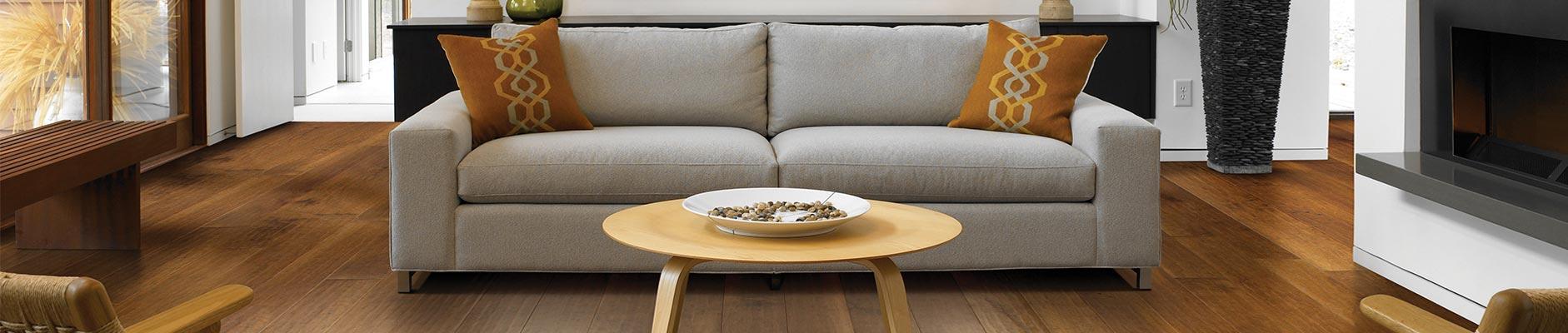
A Great Choice for Homes with Pets & Children
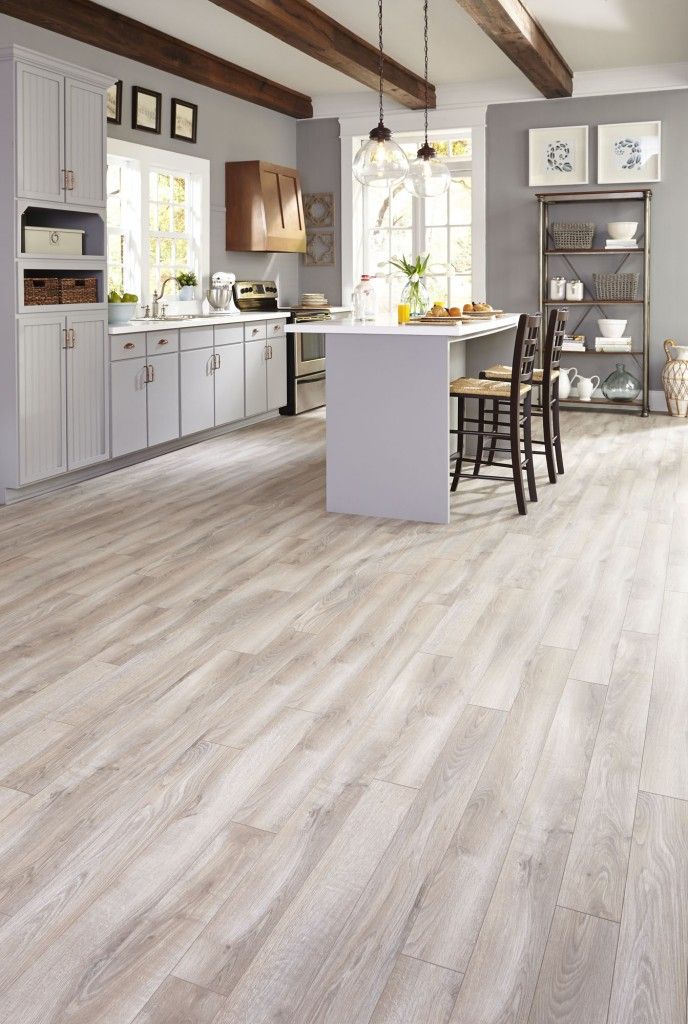
LVP has become one of the most popular flooring choices in Edmonton, and it's not hard to see why. It looks great, holds up well, and works in rooms where other options struggle. If you're trying to figure out whether it's the right fit for your space, this page covers everything from how it's built to how it performs in our climate.
LVP gets compared to a lot of other products, which makes sense because it's trying to look like wood while being something else entirely. So let's clear a few things up.
Compared to laminate, LVP is 100% waterproof where laminate is only water-resistant at best. Laminate has an HDF core that swells when it gets wet, and once that happens, the boards are done. LVP doesn't retain water at all. You could soak it and it wouldn't swell. It handles temperature and humidity swings better, which matters a lot in Edmonton.
Compared to hardwood, LVP costs roughly half as much, is more durable, and is fully waterproof, none of which hardwood can claim. The honest tradeoff is that nothing quite matches the look, feel, and warmth of real wood. If that's what you're after and the budget is there, hardwood is worth it. If you want a great-looking, hard-wearing floor at a more practical price point, LVP is the smarter call for most spaces.
Compared to ceramic tile, LVP is warmer, quieter, cheaper, and far more comfortable to stand on for long stretches. It also won't chip the way tile does. For kitchens, laundry rooms, and bathrooms, LVP holds its own easily. Tile still wins in wet areas like shower enclosures, but outside of that it's a close competition.
And compared to old-school vinyl sheet? They're barely the same product category. Sheet vinyl was a thin, 2mm roll that was easy to tear and prone to ripping without expert installation. Modern LVP comes in solid planks with a structural core and a protective wear layer on top. Installation is easier, it's far more durable, and the look is genuinely convincing.
Where LVP isn't the right call: if you're set on the look and feel of solid hardwood and the budget is there, LVP won't fully satisfy you. It's also not the right choice for outdoor spaces or areas with continuous standing water. But for most rooms in most Edmonton homes, it performs extremely well.
LVP can be installed a few different ways, and the right method depends on your space.
Click-lock is the most common method for residential installations. The planks snap together without any adhesive, floating over the subfloor. It's DIY-friendly, works well over existing floors as long as they are smooth, and is a good choice when you don't want to use any adhesive.
Glue-down creates a more rigid, stable floor and is a good fit for high-traffic commercial spaces. It's also a solid option for areas where you want the floor firmly fixed in place.
Loose lay uses a friction-grip backing to hold the floor in place with minimal adhesive or locking system. The perimeter needs to be secured with double sided tape or glue. It installs fast, pulls up easily, and is very forgiving on uneven surfaces because the planks are flexible enough to conform to minor irregularities. Repairs down the road are also much simpler with loose lay.
For basements specifically, loose lay or glue-down tend to be the better starting point since concrete floors are often uneven, and both of those methods handle that better than click. That said, click works fine in basements too. If the concrete needs levelling, we can self-level or grind it down to make it work for any method.
LVP can be installed over radiant heat. SPC products perform best because of their stability, but glue-down works well too. If your system runs hot, confirm the floor surface temperature stays within the manufacturer's spec before you commit.
The most common DIY mistake is not having the subfloor level before installation. If the floor isn't level, the stress on the interlocking system will cause the floor to fail over the years. A lot of DIYers underestimate this. Fix the subfloor first.
Before the Installation Crew Arrives:
Take all the furnishings out of the area
Doors and trim need to be off
Make sure that your subfloor is absolutely smooth and clean. A self-levelling compound can even out any cracks, hollows, or bumps
Make sure to give your floors a good wipe down, then you can start enjoying your luxury vinyl flooring!
Luxury Vinyl Plank isn't just one product. It's a category, and there are real differences in how it's built that affect how it performs.
The core is the most important thing to understand. WPC (Wood Polymer Composite) has a foamed core that makes it softer, warmer, and quieter underfoot. It's a good choice for living rooms, bedrooms, and spaces where comfort is the priority. SPC (Stone Polymer Composite) has a denser limestone core that handles temperature swings better, resists denting more effectively, and is more structurally stable. For Edmonton's climate and for high-traffic areas, SPC is generally the smarter choice for flat and level floors.
The products we carry range from 5mm glue-down options and 5mm to 12mm click products. With glue-down, thickness adds structural stability and helps hide subfloor imperfections. With click products, a thicker plank means a stronger interlocking system that holds up better over time and is less prone to separation at the joints.
The wear layer is the clear protective coating on top, and it's what determines how well the floor holds up to everyday use. It's measured in mils. We carry products with 12-mil and 20-mil wear layers. The 12-mil is a solid residential option for normal household traffic. The 20-mil is a commercial-grade wear layer and holds up noticeably better in high-traffic situations. If you have pets, kids, or a busy household, the 20-mil is worth the upgrade.
Commercial grade LVP carries a minimum 20-mil wear layer, and we can order products up to 30-mil for demanding applications. It's also worth knowing that we install a lot of commercial-grade LVP in residential spaces. The extra durability makes sense in plenty of home situations too.
LVP is genuinely low-maintenance. A few simple habits are all it takes.
Regular sweeping or vacuuming is the most important thing. Grit and debris act like sandpaper underfoot and wear down the surface faster than anything else. Beyond that, a damp mop with water and a light cleaning agent handles most messes. Avoid anything very abrasive.
The thing that causes the most problems long-term is oil-based soaps and wax polishes. They leave a film that builds up and makes the floor look dull and streaky over time. Stick to mild, water-based cleaners and your floor will stay looking good.
LVP is 100% waterproof. The product doesn't retain water at all. A spill, a pet accident, even a soaking won't cause it to swell. What people sometimes confuse with waterproof is flood-proof, and those aren't the same thing. A small leak or a spill? Wipe it up and move on. A major flood where water gets underneath the flooring? You'll need to pull the floor up, dry everything out thoroughly, and then reinstall. The good news is that with a floating click installation, any planks you didn't damage during removal can be reused once everything is dry.
Scratch resistance comes down to the wear layer. Most of our products carry a 20-mil commercial wear layer, which holds up very well against everyday scratches. SPC planks also resist denting from heavy furniture because of the dense limestone core. For pet households, keeping nails trimmed and using felt pads under furniture legs goes a long way on top of that.
"Pet-proof" on a flooring label means scratch-resistant and waterproof. It doesn't mean indestructible. A dog that regularly skids across the floor or a cat that digs at one spot can eventually work through any surface. A matte finish also helps, since it hides minor scuffs better than gloss.
Sun fading is real with prolonged direct exposure. Some products have UV protection built in. Using blinds during peak sun hours makes a noticeable difference regardless. A properly installed LVP floor with a quality wear layer can realistically last 20 to 25 years.
If a single plank gets damaged, it can be repaired. Glue-down boards are easier to swap out individually. Click installations are more involved but still doable.
This matters more than most flooring guides will tell you. Edmonton's climate is hard on floors. We go from -30°C in January to +30°C in August, and our humidity levels swing right along with it. Any flooring you install needs to handle that range.
LVP handles it well. SPC products in particular are very structurally stable, with some rated for temperature ranges from -30°C to +60°C. That's not a range Edmonton will ever actually hit, but it tells you how little our climate will stress a quality SPC floor.
Both glue-down and SPC click products have very minimal expansion and contraction. WPC click flooring may move a bit more. For any floating click installation, a quarter-inch expansion gap around the perimeter is standard. It's a small thing that matters a lot.
One thing that catches people off guard is installing LVP in winter. LVP needs to be installed at room temperature. If you're doing a renovation in an unheated space during winter, you'll need to warm the room before and during installation. Skipping this step is one of the more common reasons we see installation problems.
We carry LVP from major brands like Shaw, Mohawk, Fuzion, and Unifloor, among others. All three offer a range of products at different price points, so comparing them brand to brand isn't straightforward. What matters more than the name on the box is the spec of the product.
Price goes up with wear layer thickness, core density, and plank dimensions. A thicker wear layer, SPC core, and wider format plank all add to the cost. You don't always need the most expensive option, but skimping on the wear layer in a high-traffic space tends to cost more in the long run.
Warranties cover manufacturing defects. What they don't cover is improper installation. Before installing LVP, your subfloor needs to be level to the material spec, the temperature needs to be correct, and the product needs to be installed according to the manufacturer's guidelines. If those conditions aren't met, the warranty is void.
Whether you're doing it yourself or bringing in a crew, a few things make the difference between a great result and a frustrating one. DIY installation of click-lock LVP is manageable for anyone comfortable with basic home improvement work. The learning curve is low. The main risk is subfloor prep. If that step gets skipped or rushed, the problems show up later. Every click LVP we carry comes with underlayment already attached, so there's no separate underlayment to source or install. Glue-down products don't require underlayment at all.
Professional installation costs more upfront, but it comes with properly done subfloor prep, correct expansion gaps, clean transitions, and a warranty that stays intact. For larger projects or layouts with a lot of cuts and angles, it usually pays for itself.
LVP should sit in the installation space for 24 hours before you start so it can come up to room temperature. In Edmonton this step is especially important if the product has been sitting somewhere cold, like an unheated garage or a delivery truck in winter.